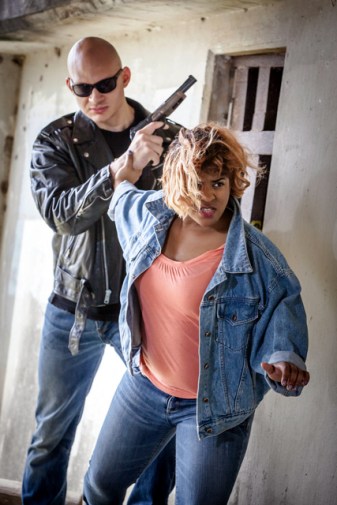
With “4000 Miles,” characters search for destinations uknown

This slideshow requires JavaScript.

The NOLA Project presents “4000 Miles”
WHAT: Regional premiere of Amy Herzog’s comedy-drama about the relationship between a former ’60s radical and her visiting grandson. Directed by Beau Bratcher, starring James Bartelle and Carol Sutton
WHEN: Wed.-Sat. (Oct. 26-29 and Nov. 2-5), 8 p.m.; Sun. (Oct. 30), 2 p.m. (Wed., Oct. 26 & Nov. 2: “Bike to Show Night” with discounted tickets for cyclists)
WHERE: Ashé Cultural Arts Center, 1712 Oretha Castle Haley Blvd.
TICKETS: $20-$35 (vary per night)
MORE INFO: Visit event page

Amy Herzog’s “4000 Miles” might be one of the most counter-intuitive works to be found on New Orleans stages this fall. It’s nominally a two-person comedy-drama, which doesn’t necessarily play to The NOLA Project’s strength as a deep well of ensemble performers. As a family tale, it lacks the narrative crackle of such intimate works as, say, “Who’s Afraid of Virginia Woolf?” or the dreamlike quality of “The Glass Menagerie.” Even as a comedy-drama, you’re never really sure at which genre it particularly excels.

But in immediately recognizing what “4000 Miles” isn’t, there’s a danger of not recognizing what it is — a sublime meditation on honest and authentic human (and familial) emotions of honesty that features actors hitting all the right subtle notes in this pairing one of the city’s brightest young stars with one of its legends.

Even in its tight, 90-minute, one-act structure, and under the direction of Beau Bratcher, Herzog’s play creates a great deal of space for the two principal characters (and even two supporting characters) to present themselves as multi-dimensional and more than a little familiar. At its heart, literally and figuratively, are James Bartelle as Leo, showing up on the doorstep of his grandmother (Carol Sutton) showing more than the hard miles of his cross-county bicycle trek. Though familiar with each other’s work, Bartelle and Sutton are working together for the first time, and their chemistry together is immediate and astonishingly tender.

They’re both a little at odds with their future. Leo, having lost his best friend in an accident midway across the country, is directionless in life, much to the concern of his (unseen mother). Not that he was exactly driven before their trip, but the death has underscored an existential angst in Leo that should hit close to home for any millennials in the audience. By contrast, Vera is experiencing all of the losses of a nonagenarian, from teeth and words and hearing to her shrinking circle of friends, and she’s not taking it well. (Every tenth word, in her now-limited vocabulary, seems to be “whatchamacallit.” The worst part about growing old, she protests, is not being able to find the words.)

Their mutual concern for each other grows so naturally that, by the end of the play, you forget that they weren’t really that close at the beginning. There were signs, though; Vera’s a former ’60s radical, and it’s clear that Leo’s somewhere in that anti-establishment mix. He’s picked up her copy of “The Communist Manifesto,” and is digging it. While he initially is not prepared for her blunt candor, chafing when she calls his ex-girlfriend chubby, Leo grows to appreciate her honesty.

Likewise, Vera does not quite Leo or much of the information- and technology-obsessed generation, or its passion for newfound recreation. When he asks for money to go climb rocks in a gym, she gasps,“More than $50? To climb a wall?” But even Leo is not too crazy about technology. They both have computers, but Vera rarely uses hers. “I don’t like ’em,” says, who doesn’t even own a cellphone,“but I can use ’em.”

[Read more: James Bartelle comes a little closer to home]

Their differences might be underscored by the fact that they’re not even blood relatives. Adoption, with its vague whispers of distance, runs throughout “4000 Miles,” which might not sit too well with us folks who are keyed into the concept. But perhaps Herzog, in her 2013 Pulitzer Prize-nominated script, uses the device as a way to encourage her characters — as often unseen as seen — to encourage people to forge their connections with one another a little freer of the pressure of biological kinship.

Connections in “4000 Miles” are always messy, sometimes funny but always real, and this is where the supporting characters show their greatest value. There’s Bec, who, as played by Annie Cleveland, who as Leo’s ex-girlfriend feels fretful and concerned about him — and still very much in love with him — and not quite sure how to relate to Vera’s brutally frank observations. And there’s also Amanda, who, as hilariously played by Anna Toujas, represents possibly the world’s easiest one-night-stand opportunity for Leo. Even the admittedly “slutty” and drunken Amada senses red flags. When he gets her name wrong, she jokes that he’s only set himself back about 20 minutes, but ultimately her antenna warns her off from even a casual hook-up with a guy who clearly needs to work his personal shit out.

Vera’s world is surprisingly complicated for a woman of a certain age we think we know. We only know she’s been married twice, but not the why and how of it until later. And her problematic relationship with her next-door neighbor (another older woman) — carried on strictly by phone — only complicates her lonely existence in her Greenwich Village apartment.

4000-miles-001

James Bartelle and Annie Cleveland. (Photo by John Barrois)

Like a slow-drip faucet, facts, truths and anecdotes plop into the story, and we learn more about Vera’s romantic life and Leo’s tragic loss (often with the help of a shared marijuana joint). We learn, awkwardly, of Leo’s problems connecting with the people in his life, including his relationship with his tone-deaf mother and one with this adopted sister — a relationship that borders on the incestuous.

As mentioned previously, Bratcher handles this understated story and his actors with equal subtlety; at no point do we get much in the form of fireworks, and this is a good thing. These are characters and themes Bratcher wants us to find and understand and sympathize with on steady emotional terms, and if at times “4000 Miles” errs on the side of narrative caution, it’s forgivable.

The same can be said for John Grimsley’s set design — a spare apartment with a flood of books but light on art hanging on the walls — and Joan Long’s lighting. (Only the changing shade of light streaming from an outside window and against the building’s wall tells us what time of day it is.)

[Learn more: Read Ted Mahne’s review on NOLA.com | The Times-Picayune]

“4000 Miles” might not be the grandiose relationship story that gets some theater audiences all worked up — but by the end of the journey, thanks especially to this gifted cast — you’ll realize by the drive home just how far you’ve come.
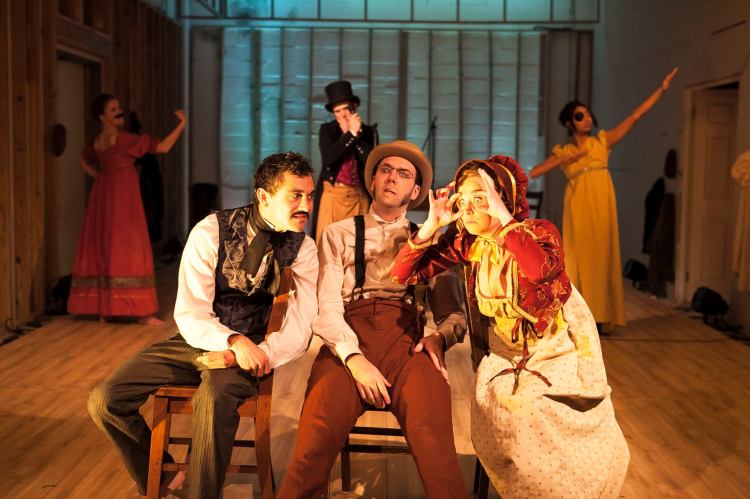
Uncomfortably “Numb,” once again: Goat in the Road gets back in the chair

14500241_10154444151351760_8418151351694952114_o“Numb” — Chris Kaminstein directs Leslie Boles Kraus, Ian Hoch, Shannon Flaherty, Dylan Hunter, Emilie Whelan, Jake Bartush, and William Bowling
WHEN: Thurs.-Fri. (Sept. 29-30), 8 p.m.; Sat. (Oct. 1), 7 p.m. & 10 p.m.
WHERE: Catapult Performance Space (609 St. Ferdinand St.)
TICKETS: $15 general admission, $10 students
INFO: Visit the Facebook event page

I was always bummed I didn’t get “Numb” after interviewing Goat in the Road Productions’ Chris Kaminstein back in 2014 when the theater company presented this examination, so to speak, of all things pain management.

Fortunately, the show is back for an encore performance, relaunching last weekend and, following its run in the Catapult Performance Space (609 St. Ferdinand St.), will hit the road later this fall for a U.S. tour.

14290045_10154399846036760_1324648673572932237_oThe production, which won Big Easy Awards for Best Ensemble, Sound Design (Kyle Sheehan) and Original Work-Devised, is serving to kick off Goat in the Road’s 2016-17 season, though without original cast members Francesca McKenzie and Todd D’Amour (we miss them!). The work takes a look at early 19th century attempts at pain-free surgery, as well as “the ecstasy and intoxication of drugs that alter human consciousness, and the often-forgotten human stories that accompany advancement.”

It was a truly collaborative effort, director Kaminstein told me, in which the company partnered with the Pharmacy Museum as well as the Cachet Artist Residency Program to bring together experts in the field, as varied as Dr. Harry S. Gould, professor of Neurology and Neuroscience at the LSU Pain Mastery Program and a Cajun healer. The inspiration:

Goat in the Road has spent a couple of shows looking back at history to mine for interesting artistic material. One of the things I love realizing (over and over again), is that inventions we take for granted, like getting knocked out for surgery, have human complication attached to them. When nitrous oxide and ether were first being used in dental surgery in the mid-19th century, there was a tremendous battle between three men for the claim of being “first” to try it. Each man, over the course of 10 years or so, was destroyed by this fight in different ways. In “Numb,” you will see the story of Horace Wells, one of the first to try nitrous in dental operations, and his steady decline and eventual addiction to chloroform.

I’m planning to attend this evening’s performance and will share my thoughts soon after. Visit the Goat in the Road website for the rest of the 2016-2017 season.


Playwright Gabrielle Reisman’s Top 5 influences for “Flood City,” opening The NOLA Project’s 2016-17 season

This slideshow requires JavaScript.


“FLOOD CITY”
WHAT: The NOLA Project presents its 2016-17 season opener, written by Gabrielle Reisman, directed by Mark Routhier, and starring Ashley Ricord Santos, Keith Claverie, Amy Alvarez, Trey Burvant, Ian Hoch, Jessica Lozano, Matthew Thompson
WHEN: Thurs.-Sat. (Sept. 1-3), 8 p.m.; Sun. (Sept. 4), 2 p.m.; through Sept. 17
WHERE: New Orleans Center for Creative Arts (NOCCA), 2800 Chartres St.
TICKETS: Thursdays and Sundays: $30 general admission & $20 for NOLA Project Backstage Pass Members. Fridays and Saturdays: $35 general admission & $25 for NPBPM. Purchase online at www.nolaproject.com or by calling 504-302-9117.

“Flood City” already was remarkably timed as The NOLA Project’s 2016-17 season opener, what with its proximity to the 11th anniversary of Hurricane Katrina. The recent floods in Louisiana — first in March, in north Louisiana, and the a couple weeks ago in south Louisiana — make playwright Gabrielle Reisman’s world premiere feel downright prescient. But as with lots of productions, there’s a lot more to “Flood City” than just water, as we’ll learn from Reisman after requesting her influences for this work — her third produced by The NOLA Project, which mounted “Taste in 2009 and Catch the Wall” in 2013. This production is directed by Mark Routhier. Here’s what Reisman had to say about it:

“Flood City” charts the wake of The Johnstown Flood of 1889. The flood has destroyed the bustling steel town of Johnstown, Penn., and left a motley crew of survivors and surveyors to clean up and rebuild. Meanwhile, at a bar in Johnstown a century later, laid-off steel workers wax metaphoric about past lives and future ambitions. Traversing time and space, the play is an all-too-apt mirror of our present times. It takes a darkly comic look at both the lunacy of rebuilding and the strength it takes to clean up and start over.

Though I watched a fair amount of Johnstown Flood documentaries, 1980s country music videos and revivalist church services in writing this play, these five videos most influenced the dark-hopeful magic I was trying to build in “Flood City.”

“Telephone,” Lady Gaga — These U.S. soldiers in Afghanistan’s version of Lady Gaga’s “Telephone” may be my favorite thing on the Internet. I love the combination of completely earnest choreography and fabulous DIY costumes against the intense polish of the pop music. Add to this the fact that it was made in the strange anti-space of an occupying army base in a war zone. It’s more Dadaist than anything Lady Gaga herself could dream up. “Flood City” is about a bunch of folks making something out of nothing in the midst of disaster. It employs a similar sense of play and peril. A man moves nonchalantly through the wreckage with a pipe sticking out of his head. Two women sell bits of broken flood relics to first responders. There’s a blitheness-of-necessity inside the catastrophe.

“Don” — I’ve been enamored with the 1978 Bollywood film“Don” since I was in high school. “Don” follows a charismatic crime boss (Don), the woman who wants to see him dead, the man who begins impersonating him, and their complicated romance. I’ve spent years looking at Bollywood songs from this period because they usually involve a character singing a secret to the person the secret’s about. The person they’re singing to can totally hear the words, but it’s as if the song takes place in some sort of breakaway dream moment. When it’s over, we as audience know more about the person singing and their secret intentions, but the person who heard the song is none the wiser. In this song, the man impersonating Don is telling Don’s criminal brethren he’s not who they think he is and he is tricking them all. You can read a weird translation of it here. In “Flood City,” and in all my plays, I’m interested in the moments where characters casually break the fourth wall and the ways giving an audience secret knowledge invests them in the world. There’s also a lightness/sharpness/silliness to this video that I love so hard. We’ve been playing with that same light/sharp/silly combo as we put the play on its feet.

“Get Into the Groove,” Madonna — In “Flood City,” the survivors of the Johnstown Flood live onstage simultaneously with a dive bar of newly out-of-work steel men in 1992. When I was figuring out how these two times intersected in the play, I was listening to a lot of pop and country songs from the late 1980s and early ’90s. Writers do this sort of lucky-socks thing where we’ll hear a song that makes us see something new about our play then we obsessively listen to it on repeat like its a portal for all of our play’s secrets. Madonna’s “Get Into the Groove” was this song on this play. The upbeat call to dance was somehow the perfect discordant window to these jobless, uncertain steel men.

“Funnel of Love,” Wanda Jackson — This song makes me swoon every time I hear it. It’s sexy and a little scary. There’s queerness and down-the-rabbit-hole quality to the song that I dig so much. While “Get Into the Groove” feels like the way 1992 operates inside a story about folks in 1889, “Funnel of Love” is the way these two times are dancing up on each other: an off tempo two step between different disasters a century apart.

“Tambourine Praise,” Jacolby Parker — “Flood City” skirts a little with miracles and faith. I spent a lot of time parsing through spirituals of the late 1800s, as well as the ballads and parlor music that was written about the Johnstown Flood itself. In the end, though, the thing that spoke to me most were Baptist tambourine breaks, and the sermons that lead right up to these breaks. Of all the videos I watched, and even of my memories visiting Franklin Avenue Baptist Church in the 1990s, this post by Jacolby Parker gets me the most. It is so simple and so personal and so skillful. I wanted to touch on the hope inherent in rebuilding and the way we have to give ourselves over sometimes to a higher power — the rigor and joy it takes to let go and move forward.


Xena Zeit-Geist’s Top 5 Miyazaki films, in advance of “Howl’s Twirling Tassels”


14012704_1740923706156440_88051356_o

(Photo by Jerome Gacula)

“Howl’s Twirling Tassels: A Burlesque Revue Celebrating Hayao Miyazaki,” featuring Xena Zeit-Gest, Grand Mafun, Sarah Duprix, Remy Dee, Dane Baxter, Loretta Dean and Miss Margery
WHEN: Fri. (Aug. 12), 9 p.m. & midnight
WHERE: Eiffel Society (2040 St. Charles Ave.)
TICKETS: $10 general admission, $20 VIP
MORE: Visit Facebook event page

The Society of Sin long has trafficked in pop-culture homage that taps into such familiar territory as comic books (“Arkham ASSylum: A Batman Burlesque Play”) and TV game shows (“The Vice Is Right”). But with “Howl’s Twirling Tassels,” this nerdlesque troupe explores pop culture in a very different, and potentially more vivid, way in its tribute to Hayao Miyazaki. The legendary Japanese anime director and his Studio Ghibli crafted critically acclaimed movies for decades before stunning American audiences with the 2001 release of “Spirited Away” — which won an Academy Award for Best Animated Feature and helped audiences take a second look at previous releases such as “Princess Mononoke” and preceded the 2004 Academy Award-nominated “Howl’s Moving Castle.”

Miyazaki’s films work against many of the narrative and visual styles to which American audiences are generally accustomed to, unafraid to explore dark, even adult themes with fluid, sometimes languid rhythms and pulsating images. They often feature strong female protagonists, one of many reasons they are a fitting inspiration for The Society of Sin. On the eve of Friday’s performance, producer-performer Xena Zeit-Geist offers her five favorite Miyazaki films.

“Princess Mononoke” (1997) — “Princess Mononoke” was the first of Hayao Miyazaki’s films that I ever saw, so it will always hold the most special place in my heart. I remember picking it out from the video rental store during a weekend with my dad because of the wolf on the cover (I was obsessed with dogs and wolves as a child) and immediately being hooked. Rewatching the movie as an adult, the moral ambiguity of the film continues to fascinate me. I love stories where there’s a clear conflict but it’s not cut-and-dry good vs. evil, like the San vs. Eboshi conflict in “Princess Mononoke.” Lady Eboshi is the antagonist of the story, but she’s an incredibly strong, inspirational leader who does what she feels is best for mankind, no matter the stakes, and Ashitaka clearly has a lot of respect for her. She’s the first female character that I remember seeing portrayed as a benevolent, competent ruler in a children’s movie and one of the first “villains” who wasn’t straight-up evil. From the first time that I saw the film, I admired Lady Eboshi, even though I ultimately sided with San. At the time that I first watched “Princess Mononoke,” I strongly preferred the company of animals to the company of humans and was really banking on finding out I was an Anamorph (or at least realizing my ability to converse with animals like Eliza Thornberry) before I got too old so that I could go live in the wild and not deal with people anymore. I may have related to San’s anti-human self-loathing on a deeper level than most of my peers at the time. (Side note: I’m still secretly sort of upset that I still have no idea what my cat is saying the majority of the time.)

“Howl’s Moving Castle” (2004) — I read an interview of Hayao Miyazaki where he actually named Howl’s Moving Castle as his favorite of his creations, and I think that this is where his passion for filmmaking really shines. Miyazaki was open about his rage over the war in Iraq, which partially inspired the pacifist themes of “Howl’s Moving Castle,” but his strong opinions never come off as heavy-handed or preachy; it’s even easy to get swept up in the sweet, whimsical side of the plot. However, the film still manages to tackle a plethora of complex issues — depicting the atrocities of war, championing the message that life is worth living at any age, and, once again, illustrating that sometimes conflicts are more complex than good vs. evil and that even those who might be considered villains are capable of positive change, introspection and personal growth. Plus, there just really aren’t enough movies with badass little old ladies as lead characters, and Miyazaki’s portrayal of Sophie makes getting old seem pretty awesome.

“My Neighbor Totoro” (1988) — “My Neighbor Totoro” is one of the strangest, most imaginative stories I know of, and therefore one of my favorites. From the soot sprites, to the cat bus, to Totoro himself, Miyazaki creates a cast of fantastical, yet somehow oddly believable, characters in this heartwarming adventure. The cat bus is probably my favorite thing about the movie. I just rewatched this one with my roommates, who’d never seen it before, and it was getting to the part where Mei and Satsuki are waiting at the bus stop with Totoro, and then it’s Cat Bus that rolls up — such a strange and pleasantly unexpected creature. We all just laughed and marveled at the strange way that she moves with her little caterpillar legs. (I always imagine that the cat bus is a lady, even though I don’t think that cat buses actually abide by the gender binary.) When Loretta Dean mentioned wanting to do a Cat Bus-themed burlesque act, I was over the moon with anticipation! I believe the soot sprites will make an appearance, as well, and am told that her act will contain some audience interaction.

“Spirited Away” (2001) — As a kid who obsessed over books and movies like “Alice In Wonderland” and “The Wonderful Wizard of Oz,” I was absolutely smitten the first time I saw “Spirited Away.” Another masterpiece in imaginative storytelling, “Spirited Away” immediately swept me up in its dazzling and dark fairytale world. Like the strange, fantastical creatures in “My Neighbor Totoro,” the inhabitants of the film’s spirit world fascinated me to the point that I’d find myself my own versions of No-Face monsters and pig people and thinking of little backstories for them. It’s also an excellent examination of the effects of capitalism and consumerism; once again, Studio Ghibli manages to explore extremely complex, grown-up themes in a film made to appeal to young people without sacrificing story or watering anything down.

“Kiki’s Delivery Service” (1989) — While some might argue that “Kiki’s Delivery Service” in some ways lacks the complex conflict and fantastical drama the makes so many of Miyazaki’s other films remarkable, it’s an endearing film with a lot of heart and one of my favorites. The film centers on a 13-year-old witch-in-training who’s transitioning into adulthood and getting her bearings as a practitioner of magic. Unlike so many Studio Ghibli films, “Kiki’s Delivery Service” does not delve into a morally ambiguous conflict between external forces but instead makes an antagonist out of the title character’s own self-doubt. In the film, Miyazaki does an expert job telling the story of a compassionate, resilient young woman who learns the value and power of her own vulnerability. This will always be one of my favorite movies to re-watch as someone who regularly battles villains such as “Imposter Syndrome” and fear of failure (as so many artists do). Kiki teaches one of the most important lessons someone interested in harnessing the magic inside them can learn: To be the best witch you can be, you have to find a reason to get right back on your broom, even after a big fall, even when no one understands (not even your cat), even when you’re not totally sure that you can fly. This is the only way to experience true triumph.

Bunny Love’s top 5 (or so) influences to prep for “The Killing of a Lesbian Bookie”

Killing of a Lesbian Bookie

Bunny Love as Triple Lexxx. (Photo by Edward Simon)

WHAT: “The Killing of a Lesbian Bookie,” written and directed by Jim Fitzmorris and starring Bunny Love, Justin Welborn and Kimberly Kaye
WHEN: Thursday-Saturday (June 30-July 2), 8 p.m.; Sunday (July 3), 6 p.m.
WHERE: The Theatre at St. Claude, 2240 St. Claude Ave.
TICKETS: $25
MORE INFO: Click here

To say that Bunny Love is a woman under the influence in Jim Fitzmorris’ “The Killing of a Lesbian Bookie,” which concludes its two-weekend run starting Thursday (July 30) at The Theatre at St. Claude, would be a massive understatement. Like the playwright himself, Bunny Love brings myriad influences to a story whose title is lifted from director John Cassavetes’ arthouse noir classic. (I noted as much in my review of the playI noted as much in my review of the play.) To get a sense of this, and how Bunny Love tapped into her own vast background as a burlesque performer, I asked her to share those influences.

“Dracula” was the first play I had done in a while and my introduction to the New Orleans theater scene after moving back here from New York City in 2014. We performed the last two weekends in October — perfect for Halloween. It was a short, intense rehearsal, as I have now learned, the only kind of (Jim) Fitmorris rehearsal. I was thrilled to be doing a play and even more thrilled to be working with Matthew Mickal, Joel Derby, Kimberly Kaye, Trey Lagan and Jim Fitzmorris. I fell madly in love with everyone involved! I’d been hit by a car on Oct. 8 while riding my bike in Audubon Park and broke my left wrist in three pieces. I could have felt sorry for myself and gotten depressed, but this show, with these people, saved me from that. At the end of our run, Jim had a light-bulb moment and realized Kimberly Kaye and I were the two actresses he’d been seeking for his play “The Killing of a Lesbian Bookie,” a play he’d written in early 2013. He’d always had his college buddy, L.A.-based actor Justin Welborn, in mind to play Irish, but couldn’t find the right fit for the two female characters: Triple Lexxx, the burlesque star about to open her own club, and Bookie, her wise-rackin’ “Fake-O tough guy” girlfriend. When I took Jim’s script home and read it, it was like he’d written it for me! I was a little freaked out. Justin and Kimberly (who was living in New York City, but recently moved here) were able to come to New Orleans in November for a reading. Sparks were flying from that first table work. We were titillated with excitement. We decided we would do the show in June. Justin arrived on the night of the 13th, and we went to work. Long, intense, eight-to-nine-hour rehearsals with people I love and admire is pure joy for me! We opened the show on the 23rd. It all came together with “hard work and hustle,” and a lot of theatrical magic. The show is a blast — three damaged human beings looking for redemption, spitfire dialogue, and a twisting plot that will literally keep you on the edge of your seat. I did some very specific work to prepare for this play. Here are some of my inspirations.

John Cassavetes — Filmmaker, actor and just my type of man, intensely sexy and infinitely cool. Like my character, Triple Lexxx, I “love all Cassavetes.” After our initial table work, I had a Cassavetes move marathon. I spent days watching everything: “The Killing of a Chinese Bookie,” “Shadows,” “Faces,” “Husbands,” “Minnie and Moskowitz, “A Woman Under the Influence,” “Gloria,” and “Big Trouble.” I think I missed one or two. Falling in love again with the man and his movies, his “gritty American realism,” and how it related to “The Killing of a Lesbian Bookie.” Cassavetes presented difficult, flawed characters in disturbing situations delivering clever dialogue one might hear at a cocktail party gone wrong. It was helpful to steep myself in that world. There is a particular feeling in all of Cassavetes’ work, and that feeling is there in “The Killing of a Lesbian Bookie.” Irish, Lexxx and Bookie, all with their faults and dark secrets in a frightfully tense situation with crisp dialogue that sometimes erupts into shouting. I never met Cassavetes, but I did have a “next best thing” moment when I met Ben Gazzara at a film festival in New York City and had a mini-makeout session as I was putting him into a cab at the end of the night. Yum!

All the movies mentioned in “The Killing of a Lesbian Bookie” (in addition to Cassavetes) — “The Friends of Eddie Coyle,” “The Town,” “Frankenstein,” “The Godfather,” “Guys and Dolls,” “Chinatown” and “The Count of Monte Cristo.” I needed to understand the references to these movies, but I also found a love and appreciation for these beautifully constructed films, most of which I would have thought aren’t really my thing, but found myself riveted. Like Irish and Lexxx, I also love movies, and it was just great to be reminded of that. These films are also full of characters, situations and dialogue that related to life and informs “The Killing of a Lesbian Bookie.”

Barbara Stanwick (specifically in “Baby Face”) — this is a wonderful character study of a woman who knows how to use what her momma and daddy gave her to get what she wants. It’s super racy for 1933! She is always in control of herself and her situation — well, until the tragic end. I tried to take on that strength and control. I even stole a few facial expressions and gestures. She’s a woman on her way to the top. She knows what she wants and she will do whatever it takes to get it. She’s scrappy and comes from the wrong side of the tracks, but has groomed herself to hide all that. Triple Lexxx is also all of those things.

Lauren Bacall (specifically in “The Big Sleep”) — She is know for her cool demeanor and unflappable poise. I think Lexxx made a study of her and wanted to be that cool. I studied her posture and her stillness; she hardly ever moves her shoulders. It’s incredible and so powerful, and her hands, her beautiful hands! Another piece of candy from this movie was the way she and Bogart flirted, the cat and mouse, the wordplay. They are the best. We strive for something like that in our play. Finally, it was the love between Bogart and Bacall. You could feel her love for him. I wanted that for Lexxx: a true love. I want the audience to see that in my eyes.

My own life and various burlesque performers, strippers and sex workers I am friends with or have known — One of the first things you do as an actor is look for the connective tissue between yourself and the character. Luckily, I had so much to draw on, not that it’s the same, but that it’s relatable or easily substituted. Of course, there’s my long career in burlesque, but I had also fantasized about opening a burlesque club here, before I moved back, so I already knew what it looked like. I also used pieces of women I know, their lives, their personalities. So many influences, both good and bad, but I don’t want to incriminate anyone so I’ll just give you a few examples: From my BFF, my wife, Bambi the Mermaid, I used her incredible ability to manifest exactly what she wants in life. From Julie Atlas Muz, I got her Detroit toughness. Julie is a lovely, sweet person, but definitely the lady who can take care of herself. From Dirty Martini, I borrowed her undying passion and pure love for burlesque, performing and entertaining.

With “The Killing of a Lesbian Bookie,” Jim Fitzmorris plays all of his angles

4-001

Photo by Edward Simon

WHAT: “The Killing of a Lesbian Bookie,” written and directed by Jim Fitzmorris and starring Bunny Love, Justin Welborn and Kimberly Kaye
WHEN: 6 p.m. Sunday (June 26); Thursday-Sunday (June 30-July 3)
WHERE: The Theatre at St. Claude, 2240 St. Claude Ave.
TICKETS: $25
MORE INFO: Click here

Jim Fitzmorris wears his influences on his sleeve. Or, in the case of “The Killing of a Lesbian Bookie,” on his plays’ title, and on the spare stage of his latest work that opened this weekend at his Theatre at St. Claude. Movie posters of “The Friends of Eddie Coyle” and rows of DVDs from The Criterion Collection fill the stage and prompt snippets of dialogue from the characters, but clearly they’re laid bare as if transported from Fitzmorris’ home, or brain.

So when smooth-talking and wise-cracking beverage vendor (Justin Welborn) shows up on the soft opening of a nightclub venture and starts flirting with the co-owner and featured performer (Bunny Love), their shared of love of ’70s crime films by Cassavetes, Polanski and Coppola, the audience immediately knows that this is Fitzmorris at his most reverential and referential. But almost as immediately, as a flirtation turns to threats and then into terror and then into intrigue and possibly back again, the audience also recognizes another Fitzmorris passion: complexity. It’s the complexity of motivations, of desire and even of language that often motors Fitzmorris’s works, and while they’re often challenging to follow, they’re always worth the ride.

“The Killing of a Lesbian Bookie” is an uptempo and bumpy ride in which allegiances switch with every “reveal,” a popular word in a show and with burlesque undertones. (Fitzmorris, also a frequent chronicler of New Orleans’ burlesque scene, knows this as well as he does movies.) As the co-owner of the Triple Lexxx club, Bunny Love can practically live the role, having performed for several years in New York City’s gritty neo-burlesque scene. She returned to New Orleans a couple years ago, bringing her New York sensibilities to shows such as Bella Blue’s “Dirty Dime Peepshow” while increasingly elevating her theater profile. So when she recounts a seedy story of life as a stripper, as with Fitzmorris you almost want to believe it comes from her own experiences. But you can’t dwindle on the thought for very long in this 70-minute one-act play. The action’s too fast.

The play starts off with Lexxxi ready to open her nightclub, for which she’s scrimped and saved to open and make her meal ticket after years in the business, with the help of her lover (played by a twitching Kimberly Kaye). Those plans are compromised by the appearance of Irish, who presents himself as the beverage supplier for the club, and the two strike up a conversation that goes beyond business.

It’s just when Irish senses Lexxxi’s loyalty to her partner has its own motivations that he reveals (at least one of) his own after a frantic phone call from her partner, a part-time bookie who warns Lexxxi that Irish has come to kill her. Hanging up the phone, Lexxxi can only keep her poker face for so long before Irish explains his presence:“Bookie” owes debtors for huge gambling losses built on Lexxxi’s money. But he tries to calm her down with the slightly reassuring thought: “I’m the second-to-the-last person you want to see. … In politics and crime, there’s always a second-to-the-last-guy.” Lexxxi, twisting around their previous flirting, responds, “You watch too many movies … so you’re Tom Hagen (of ‘The Godfather’ fame)?”

Irish offers a proposal — more a less-worse option — in which Lexxxi signs the club over to him so he can gain control of it (and Lexxxi) to help pay off the debt as long as Bookie disappears.

A tight cast makes great work of a tight though sometimes dense script, with Justin Welborn (FX’s “Justified”) bringing a pitch-perfect mix of cynicism, swagger and a sliver of vulnerability to his role. He could either try to dominate the stage as the lone male character or get lost in a lover’s quarrel, but he does neither, and it’s a neat trick. It is only fitting that his character once was an aspiring movie mogul, playing on Welborn’s own movie experience. And Kaye’s nervous intensity crackles throughout the show, even at times drawing in the audience’s sympathy with her own vulnerability. Through her desperation we still see another soul trying hard, like the others, not to be lost. If they all need a few moments in the early going to get their footing with the script, they all hit their stride quickly enough.

They do this just in time for a cleverly conceived passage in which exposition is revealed in a three-way dialogue between them, told partly in present time and also in flashback, with each character alternating in filling in the holes. It’s all wordplay as gunplay, of which there’s plenty already.

So much about “The Killing of a Lesbian Bookie” is about control, which makes it that much more interesting when Lexxxi explains why she favors burlesque over stripping: “Because it gives the illusion that the audience is in control … the only decisions are mine.” Once every character has explained their angle in this love triangle, it’s Lexxxi’s call.

Jim Fitzmorris bills the play as his first full-length piece since “A Truckload of Ink,” which he followed up with such works as his brilliant manifesto-monologue, “Be a New Orleanian.” He’s found a home for his works at The Theatre at St. Claude, with an intimate space that David Raphel makes great use of in his set design. Su Gonzcy works the lighting deftly in what amounts to two adjoining rooms, and Dana Marie Embree’s costumes blur the lines between the ’70s and the present day.

And yet, watching this compressed treat, I can’t help but wonder if “The Killing of a Lesbian Bookie” could be something a little grander — like, say, a burlesque musical where Lexxxi’s dreams of a fabulous nightclub come to life, with music and dance numbers as eloquent as Fitzmorris’ rapid-fire dialogues and monologues. That’s not so much a criticism as a wish. This work is already more fully realized in narrative structure and prose than its casual inspiration, John Cassavetes’ 1976 arthouse noir, “The Killing of a Chinese Bookie.” As good as this play is, you sense the possibilities of something even grander.

I guess that’s the point of burlesque: Always leave the audience wanting more.

New Orleans actress Kerry Cahill on her own loss, following Pulse Orlando shooting

Editor’s Note: New Orleanian Kerry Cahill is an educator and professional actress whose life in public was completely transformed when her father, 62-year-old physician’s assistant Michael Cahill, was the only civilian among the 13 murdered in the Fort Hood mass shooting back in 2009. Cahill, whose screen credits include such films as “Now You See Me,” “Oldboy,” TV’s “Common Law” and the upcoming “Free State of Jones,” was featured in Greg Barker’s documentary “Homegrown: The Counter-Terror Dilemma” — which began airing on HBO this past February. In the aftermath of the Pulse Orlando shooting, I asked Cahill if she would reflect on her experiences and how if at all these recent shooting resonates with her.

I will introduce myself. My name is Kerry Cahill, I’m an actress and a teacher and a 16-year resident of New Orleans. My father was murdered at Fort Hood Army Base on Nov. 5, 2009. It was a domestic terrorist attack. “Domestic terrorism” means activities that A) involve acts dangerous to human life that are a violation of the criminal laws of the United States or of any State; (B) appear to be intended — to intimidate or coerce a civilian population; to influence the policy of a government by intimidation or coercion. Also: It means it’s at home, and the attack comes from home; meaning the terrorist is from your country. It also means the attack may not always be violent.

So this definition includes the Westboro Baptist Church, the Charleston, S.C. shooter, the Oak Creek shooter, the Orlando shooter, and the Lafayette shooter. I make sure we realize this because I’m pointing out that we have a very large problem in America that is beyond Islamic extremism. Domestic terrorism doesn’t discriminate; domestic terrorists will target any group they don’t like: soldiers, homosexuals, women, religious groups and African Americans.

Now that the definition of domestic terrorism is clear, let’s move on. We are a country in grief and we have been in grief for a very long time. I don’t know anyone that has not been affected by gun violence, and I know quite a few people all across the nation. I travel a lot, and I moved a lot as a child. I’m willing to bet you, the reader, know at least five people affected by gun violence. So it is safe to say that we have a violence problem in America and people are using guns most of the time to enact this violence.

I’m not sure how to say this next part without it sounding mean, but it’s important that you realize this. You are probably not going to be a hero if this ever happens to you. I say this because I think the human condition requires us to have a sense of certainty and control over our lives to feel safe. Mass shootings and gun violence are obviously uncertain. No one I have ever met runs faster than a bullet. There is no negotiating. So if you are in a movie theater, club or a well-lit mall, and you have a gun and you are not a special forces or SWAT-team-trained individual, the first thing you will do when the shooting starts is freeze for about three seconds. Three short seconds. About five bullets. It’s not on purpose, it’s not because you don’t care; it’s because your body is in shock. If you have not already been shot now you are catching up and there is chaos, people are running, screaming, the gunman is still shooting, and you are shaking. Now pick that gun up and miss all the other people and make a kill shot in three seconds while the shooter is moving around. Do it! Come on! What’s wrong with you?

(Learn more: Read CNN article on Michael Cahill)

At the Soldier Readiness Processing Center on Fort Hood Army Base there were many heroes; charging the shooter, warning people and saving lives. Most of the people there that day were trained soldiers and first responders; uniquely able to respond to an attack. My father was one of the people who charged the shooter. Let’s explain him a bit: 62 years old, more than 20 years in the Army, and grew up on the wrong side of the tracks in Spokane, Wash.. He was also in a cubicle when it started, so frankly that gave him two or three split seconds to start running. He was a hero everyday, too. He stood up for people all the time, fought for his patients, and never backed down. It was a habit with him to fight; to charge the bad guy was an extension of that. I urge you to look at your daily habits, because that’s what comes out when a trauma happens.

I still miss my dad, I fight for veterans to further his mission, I tell stories about him, I emulate him, and I …. I cry, more often than I will admit. I cry when something great happens, when something bad happens, I pick up my phone and call his voicemail; we still have his phone on. I’m missing a piece of me. I’m never getting it back, and I am just one of the thousands upon thousands affected. I can tell you there are wounded from the Fort Hood shooting still getting treatment from their wounds, bullets lodged in their bodies, severed nerves, brain surgery after brain surgery, and more.

Brody's 1st Christmas

Michael Cahill with family

I can tell you that the phrase “That must have been hard.” is haunting. Why is it past tense? Do people think that mass shootings, trauma, terrorist attacks suddenly go away? I’m getting better at moving through life with this suitcase of trauma, but movie theaters make me nervous, as do buildings with one exit, and lone men who look a little too quiet or angry because 99 percent of mass shooters are lone men who are a little too quiet or angry.

I say all this because you might think about this when a mass shooting is near your home or your city, but for me it’s a computer tab in my brain that is always open. I am not saying I never laugh or smile or feel joy. I do. I just need you, the reader, to understand that I’m laughing through some pretty thick scar tissue, and, unfortunately, there are more and more people like me every day. That is the bigger problem. I wish I was unique. I don’t want you or my future children to feel this way.

Thank you for reading this. I know this isn’t easy. This does not mean I don’t think you should have a gun. I know people who evacuated to safety during Katrina because they had guns to keep them safe. I own a gun, as do most of my friends, and guns are what eventually took down my father’s shooter. Let me be clear: I do not think all guns should be banned. I’m just pointing out that in a couple weeks before the next shooting, we will sit back down and forget that we still need to fix this problem. We will sit back down into our “It would be different for me” world. Because we have to. We have to so we can leave the house and smile.

So here is what I’m asking you to do: Acknowledge some facts, be honest with yourself, be honest about our current politicians and continue to argue, debate and struggle through to find some solutions. I for one tend to wonder why we don’t treat guns like cars. The bigger the car the more you have to do to get a license. I don’t see this as a major issue. Terrorists and future mass shooters are buying the same guns you are, training with the same people. (My father’s shooter trained with good old-fashioned Texas gun lovers.)

Nader and Kerry Waiting to speak

Nader Hasan and Kerry Cahill prepare to speak at event

But my real point here is that we can’t stop in two weeks; we have to focus on multiple policies at a time as well. If you think one sweeping policy will fix this — like banning immigration or banning assault rifles — you’re wrong. There are more guns in America than people, and almost all the mass shooters over the past 20 years were born and raised in the USA. These are facts. I don’t like them either, but they are true. Google them. Most mass shootings are domestic violence, as well. So we, including our congressional members and U.S. senators, have to now use the same tactic the founding forefathers used when they wrote the Constitution. We have to sit in rooms and argue, debate, listen, yell, state facts and believe the facts, and come up with policies for background checks that can help, as well as access to mental health, domestic-violence policy changes, funding for metal detectors possibly, hotlines for people worried that they know someone who needs a mental-health assessment, more training required if you want to own a certain type of gun that can kill 50 people in a short amount of time, etc., etc. … I put the “etcetera” there on purpose because I don’t know the answer, either.

I do know that I will probably not make it out of a mass shooting alive. I won’t win against an AR-15 or a Glock 45. I won’t, and that’s OK. I never want to have to fight one again, I already got lucky once: I was robbed at gunpoint and made it out alive. And if you think you’re tired of the violence, imagine how the 13-year-old in my school who lost her 3-year-old sister to a drive-by shooting feels. Imagine how I feel, imagine how a 9/11 survivor feels, imagine how a president who has had to hug more than 100 victims’ family members feels. So don’t get tired — get mad, get energetic, and don’t stop because I’m never moving out of the USA. I will stay and make it better. I hope you do, too.

See ’Em On Stage announces 2016-17 season along with expanded programming, restructuring (exclusive)

This slideshow requires JavaScript.

See ‘Em On Stage, the nearly three-year-old New Orleans theatrical company known for its passion for offbeat musical satire, announced a 2016-17 season fueled by a management restructuring and other changes during its “Rebel Rebel” premiere party Tuesday (May 31) at the Ugly Dog Saloon.

“This new model will allow us to offer opportunities to a wider variety of artists including local writers, directors, actors, designers, dancers, musicians, and theater educators; along with visual artists (for special projects),” Artistic Director Christopher Bentivegna said in a press release. “Our team now includes 16 diverse theater professionals working together in order to provide a multitude of projects within seven different divisions.”

That team will feature Bentivegna along with Kali Russell (associate artistic director), Bob Murrell (managing director), Breanna Beitz (managing director), Jake Wynne-Wilson (community outreach coordinator), Ashton Akridge (burlesque division coordinator), Kayln Hepting (staged readings division coordinator) and Abbey P. Murrell, Caroline St. Amant, Eli Timm, Clayton Shelvin, Anna Toujas, Robert Young, Logan Faust, Rebecca Lindell, Ariel Schwab, and Sam Cespedes.

(Read more: Christopher Bentivegna’s Top 5 favorite See ’Em On Stage productions)

New divisions to accompany the company’s main-stage productions include original works, burlesque, comedy, staged readings, community outreach and youth education. The new season also will bring on new venues such as the New Orleans Art Center, The Avant-Garden District, and The Valiant, a new theater opened by Richard Mayer — formerly of the Old Marquer Theatre. (This new theater is scheduled to open in July, the release said.”

See ‘Em On Stage already has presented work that reflects this new approach, the release said, noting the production of original short plays as part of its community-outreach program for patients and clients at both Children’s Hospital of New Orleans and Crossroads Louisiana (which services adults with disabilities). The company plans to partner with The New Movement for a program for teens to perform in a full one-act production at program’s end.

The company also has brought in Four Sweater Vests, the local staged-readings company, as one of its official divisions “with a mission to provide opportunities to both experienced and novice performers and directors through participation in staged readings of popular works.”

“This new model of different divisions will allow us to not only offer more opportunities to established as well as fledgling artists, but will provide us and the theater community in general with a more diverse and wide-reaching audience base,” the release said.

The 2016-17 main stage season will offer a schedule that speaks to the “Rebel Rebel” theme that explores the notions of heroes and anti-heroes, and will include three regional premieres and one New Orleans premiere. (Synopsies provided by the company.)

Lizzie the Musical
Written by Steven Cheslik-deMeyer, Tim Maner and Alan Stevens Hewitt
Aug. 11-28, 2016 (Thursdays through Sundays, 8 p.m.) except Aug. 13 (9:30 p.m.)
New Orleans Arts Club
Synopsis: “Four women front a rock band and tell the scandalous story of Lizzie Borden, America’s favorite double-axe murderess and Victorian hometown girl. In 1892, on a sweltering August day in a small New England town, a well-to-do elderly man and his second wife were brutally murdered with an axe in broad daylight. Lizzie Borden, their youngest daughter, was the primary suspect. She was arrested and tried, but, with no witnesses to the hideous crime, she was acquitted. The murders remain unsolved to this day and have become not only one of America’s most notorious legends but also the inspiration for this critically acclaimed new musical. This nearly sung-through rock opera’s score owes less in inspiration to Andrew Lloyd Weber or Stephen Sondheim than it does to Heart, Nirvana, Led Zeppelin, The Beatles, and Grace Slick. Starring Abbey P. Murrell, Idella Johnson, Kali Russell, and Leslie L. Claverie as Lizzie Borden. This production will be a regional premiere.” Continue reading

Christopher Bentivegna’s Top 5 favorite productions by See ’Em On Stage

This slideshow requires JavaScript.

INFO:
WHAT: “REBEL REBEL!”: See ’Em On Stage season announcement party
WHEN: Tuesday, May 31, 7 p.m.
WHERE: Ugly Dog Saloon, 401 Andrew Higgins Drive
TICKETS: $12 advance, $15 at the door
MORE: Visit www.seosaproductioncompany.com or here.

Under the supervision of Christopher Bentivegna, See ’Em On Stage has been a welcome new addition to the New Orleans theater scene at a time when we’re seeing fewer of them around. In advance of the production company’s 2016-2017 season announcement (7 p.m. Tuesday, May 31, at the Ugly Dog Saloon), we asked Chris to provide his five favorite productions.

In only two and 1/2 years, See ’Em On Stage has made quite a splash. And sometimes a bloody one. During this time, we have presented shows of various styles, from campy blood-splatter musicals to original works to a melodramatic world premiere stage production of an internationally known best-selling novel. Our productions have starred some of New Orleans’ finest singers and actors and even one multiple Tony Award-winning actor. Every production challenged us in new ways and drew in diverse audiences. Our goal, when we began, was to provide theatrical experiences akin to what New Yorkers are able to get when they venture to off and off-off Broadway shows. Every one of our mainstage productions has been New Orleans premieres and a few were world premieres where we worked directly with the writers. It is difficult to pick a “Top 5,” but the following represents the evolution of our company and the bold work we have shared with our audiences.

EvilDeadcast.Marcia Arceneaux

“Evil Dead.” (Photo by Marcia Arceneaux)

5) “Evil Dead: The Musical” — “Evil Dead” was the musical that started it all! Challenged with a script that glorifies blood splatter and gore, we focused on the heart of the musical and it was directed more in the style of a musical like “Hairspray.” I encouraged the actors to find the truth in all of their cartoon-style characters, and it was choreographed (Lindsey Romig) and musical-directed (by our multiple Big Easy Award nominated musical director Natalie True) in a bubbly, upbeat way. Right before we started rehearsing with the blood, I told the cast, “We are going to take this bright, polished, buoyant musical that we have created and we are going to crap all over it with blood.” Audiences were immersed into the action and gore by becoming part of the experience as blood was rained all over them. The show was not only a commercial success, but it was also a surprising critical one as well, garnering rave reviews from the local press and receiving multiple Big Easy Award nominations including Best Musical of the Year. It went on to win the award for Best Actor for Robert Facio’s spot-on performance as the demon-killing Ash. We would go on to produce two more blood-splatter musicals: “Musical of the Living Dead,” which was based on the classic zombie horror film “Night of the Living Dead” (and which featured more than twice the blood of “Evil Dead”), and “A Christmassacre Story,” which was a devised work (featuring puppets!) written by the talented Kimberly Kaye and starring Michael Cerveris — who only a few months later went on to win his second Tony award for his critically acclaimed performance in “Fun Home.”

Zanna Don't.Michael Clark

“Zanna Don’t!” (Photo by Michael Clark)

4) “Zanna Don’t!”  Our follow-up to “Evil Dead” could not have been more different. It was a musical that celebrated diversity and glorified everything sparkly and bright. Glitter and be gay! We assembled an amazing cast with some of the most beautiful voices in New Orleans. The Big Easy Award-nominated choreography by Lindsey Romig was astounding, particularly given the constraints she faced in the tiny Old Marquer blackbox theater (still The Shadowbox at the time). The story of a reverse world where being gay is normal and being straight is frowned upon, was embraced by audiences and critics and showed a softer, more gentle side of our company while exuding our previous aesthetic of taking risks and finding the true heart in the material. It, too, went on to garner a myriad of Big Easy Award nominations with Joshua Brewer winning Best Actor for his touching portrayal of the title character.

A New Brain

“A New Brain.” (Photo by Audion de Vergniette)

3) “A New Brain”  This was our first show that we produced outside of The Old Marquer. It was a co-production with Chris Wecklein’s (who also starred as Gordon) company Some People, LLC, and also starred Tracey Collins and Jessica Mixon in their Big Easy Award nominated performances. It was a challenging show, and we were presented with an even bigger challenge with our venue, Kajun’s Pub. This little-known, off-Broadway show was a tough sell as a musical about a man who was suffering a life-threatening brain disorder. In addition, the show is not told in a typical straightforward, linear way. It required actors who could not only handle difficult vocals (made easier by our talented music director Ainsley Matich) but who could also bring these characters to life in a way that would help provide a clearer understanding of the non-traditional storytelling to the audience. We were honored to work with some of the city’s finest performers in this show, and everyone handled his or her own role with aplomb, developing rich and memorable characterizations and stopping the show with gorgeous vocal performances. The challenge of staging and choreographing (choreography by Amanda Zirkenbach) the show in a bar was actually one of the most exciting and rewarding things about the experience. We embraced the entire space and completely immersed the audience in the world of these rich characters, telling their story with reverence, love, heart and music.

Flowers in the Attic.Christopher Bentivegna

“Flowers in the Attic.” (Photo by Christopher Bentivegna)

2) “Flowers in the Attic”  “Flowers in the Attic” was unique for many reasons. It was our first non-musical, and the first time the story, based on the best-selling novel by VC Andrews, was ever presented theatrically. We were honored to be chosen as the first production company in the world to present this beloved and controversial story, and the experience was made better by being able to work directly with the playwright Andrew Neiderman. Mr. Neiderman, known for his best-selling novel “The Devil’s Advocate,” took over writing for VC Andrews as her ghostwriter following her death in 1986 and has sold tens of millions of copies of his books under both names. The book, banned from many school libraries, was a favorite of mine since I was a child and as a senior in high school I had written, produced and directed my own one-act version for my senior drama class project. It felt fated that I would have the experience to be the first producer and director in the world to tackle this piece in its official world premiere. Dealing with themes of child abuse, betrayal, greed, incest, and murder, the play was particularly challenging in its casting. Not only did the actors have to very specifically resemble the characters that were known from the book and two movie adaptations but two of them had to be young children (under the age of 10) who could pass as twins. The cast not only handled the material with skill but also with great sensitivity as well. Each actor created a beautiful, tragic and sympathetic character and the entire cast developed electrifying chemistry. The entire experience was heightened by an effectively chilling set (Matthew Collier with Rebecca Lindell) that transformed the entire black box of The Old Marquer into the attic itself with the audience becoming “trapped” in there alongside the characters. The show went on to become an unexpected commercial and critical success and was recently awarded with multiple Big Easy Award nominations.

Terminator.Brian Jarreau

“Terminator.” (Photo by Brian Jarreau)

1) “Terminator The Musical”  “Terminator” may have been the biggest surprise of our short history as a theater company. Written by local writer, Breanna Bietz, the show received its world premiere as part of the Faux/Real festival in the fall of 2015. Ms. Bietz approached us after seeing our production of Musical of the Living Dead about potentially producing her work. Seeing an aesthetic that she felt matched the tone of her writing, she pursued what eventually became a symbiotic partnership. We recruited the creative and energetic Cammie West to co-direct (which helped us greatly since we were doing one show overlapping with another at the time) and found a cast of sexy, talented, and devoted actors and singers. What made the show so special was the special collaboration that formed between us all. The play itself went through a variety of rewrites and concepts and each actor was able to give input into the development of his or her character. The “orchestral music” was 100-percent electronic, which gave the whole production a high-energy and modern feel. The intimate space of The Old Marquer was a perfect complement to this fast-paced, tight and seductive show. Audiences embraced the show, with lines out the door and one standing room only performance after another. Critics also embraced the show, impressed with the ingenuity and creativity of the production and the talent and charisma of the cast. We were honored to receive several Big Easy Award nominations for the production and were thrilled to perform one of the best songs from the play, “Programmed to Kill,” at the awards show this past April.


Kitten N’ Lou’s “OVEREXPOSED!” reveals life for “world’s show-busiest couple” at One Eyed Jacks

This slideshow requires JavaScript.

For Kitten N’ Lou, life is no picnic, even when they’re having one. That was one of the key themes bubbling up from their “OVEREXPOSED!” show, their first full-length effort, which they brought to One Eyed Jacks on Sunday (April 17) before heading back out overseas for more touring.

Featuring former Shim Shamette Kitten LaRue, Kitten N’ Lou prove for New Orleans audiences who hadn’t seen their set at the “CREAM!” show they co-produced with Bella Blue last September that they’re doing what no other burlesque artist is doing today.  Through a curious mash-up of burlesque, boylesque drag and multi-media, Kitten N’ Lou reveal with “show within a show” cheek that gender isn’t the only thing that’s fluid in variety acts.

(Learn more: Kitten LaRue on “OVEREXPOSED!” and returning to New Orleans.)

Essentially, “OVEREXPOSED!” is a series of set pieces (presumably pulled from several of their popular acts) that speak to what it must be like to be in love and onstage together. At various times lip-synching, pantomiming and straight-up dancing, the duo checks myriad influences, whether it’s Lou Henry Hoover’s obvious love of Charlie Chaplin while doing a drag king bit or Kitten LaRue (a native of Ruston, La.) offering an expressive camp that is as reminiscent of our own drag queen legend Varla Jean Merman (without ever saying a word) as much as any striptease artist.

Their frequent collaborator, BenDeLaCreme, provided the unseen, pre-recorded narration that propels the show from one set piece to another, sometimes as basic narration, sometimes in a sort-of meta conversation with the performers. That, and some incredibly risky but often rewarding moments of total silence, give “OVEREXPOSED!” a distinction that keeps the audience on its toes. Sometimes the silence worked against them, as over-served members of the audience took to hooting, often unnecessarily, thinking they were either filling in the silent moments to help out or simply to hear themselves howl. (At one point a women checked an audience member behind with a dismissive “Not your show,” to which the other replied, “Oh, sorry, I’m really drunk.” OK…)

While 80 percent of the time they spent their moments either trying to put up with or woo back the other — during a picnic scene, Lou keeps pushing over a beer bottle to Kitten as a sign of affection, which she responds each time by semi-politely sliding it right back with increasing frustration — the show ends in a kiss, and applause.

It should come as no shock that following Sunday’s performance Kitten N’ Lou ultimately will head to the Vienna Boylesque Festival (where Bella Blue served as the headliner in 2015) — further evidence that the world is not over this couple’s exposure.

(NOTE: New Orleans’ own Perle Noire will serve as this year’s headliner at the Vienna Boylesque Festival.)